10 Things You Can Do for Someone Going Through Cancer

When I was diagnosed with Stage 3 breast cancer, my daughter was only 6 years old. It was a difficult time, full of uncertainty, fear, anger, helplessness. I felt overwhelmed and exhausted most of the time, and so did my husband and our young daughter as well.  When cancer hits, it sweeps through the whole family.

After slowly coming to terms with the diagnosis, we began telling family and close friends. And as the news filtered out to our wider community of friends, neighbours, colleagues, and even acquaintances, we found people wanted to help but weren’t always sure what to do or how to ask. In the end, it was simpler and easier for everyone if we just let people know exactly what we needed and how they could help.

So here’s a list of 10 things you can do for someone going through cancer:

1.       Deliver a meal. It doesn’t have to be fancy or made of only organic ingredients. If you are making a meal for your own family, double it up and bring it over. Remember to not only think of the cancer patient but the rest of the family, which may include young children. A batch of pasta sauce that can be frozen for later use is a good option. Here’s a handy and free scheduling tool called the Care Calendar. Family and friends can use this to coordinate meals. http://www.carecalendar.org

2.       Show up on their doorstep with an empty laundry basket. Routine household chores are probably not high on their priority list, but still need to get done sooner or later. Returning a basketful of freshly laundered and folded clothes will be a tremendous help.

3.       Run errands or pick up a few groceries. If you are worried about showing up at the wrong time, have them leave a list in the mailbox that you can pick up in the morning, or pre-arrange a convenient time. If you are doing a run to the pharmacy or grocery store anyway, picking up some extra items is not a big deal.

4.       Provide childcare. If they have young children, invite them over for a play date with your children. If you don’t have kids, or their kids are older, take them on an outing. Going to a movie will be a welcome distraction. Even a sleepover may work if the child is okay with being away from home. The parent(s) may need a break, as young children don’t understand why mommy or daddy is so tired all the time. Or the parents may need some alone time to chat. And the children may need time away from home to have some fun.

5.       Accompany/drive them to appointments and treatments. Having a note-taker during medical appointments is crucial. Doctors pass on a lot of information and use a lot of medical terms, which may not be fully grasped in the moment. Sitting with them during a treatment may be reassuring and will help to pass the time. Even a friendly and familiar face out there in the waiting room can be a source of comfort.

6.       Do exercise, yoga, meditation with them. Any type of activity that is enjoyable and good for their well-being will be welcome. It will help them feel better and gives you both something to focus on besides trying to fill up those awkward gaps in conversation.

7.       Check in with their spouse or caregiver. They are often forgotten in all of this. They are usually doing double duty especially if there are kids involved so they can be physically and emotionally drained.

8.       Don’t be afraid to talk to the kids about it. Adults are often afraid to bring up bad news with kids. They don’t want to upset them but kids are intuitive. They know what’s going on. They will probably appreciate it if you ask how mom or dad or their sibling is doing. They may need someone outside of the family circle to talk to. If you’re unsure about this, check with the parents first.

9.       Just be there and listen. Don’t offer advice (unless specifically asked for) and don’t bring up stories about Aunt Mary who went through the same thing. Everyone’s experience is different. Sit, hold their hand, pass a tissue, give a hug, make a cup of tea, let them be the lead.

10.   Send a card. It will let them know you are aware of what’s going on and you are thinking of them. Emily McDowell’s empathy cards will hit just the right note.

It was truly heartwarming when so many people found ways to help us during my cancer experience. And it wasn’t only family and close friends but distant neighbours, friends of friends, people we know casually. We will always be grateful for the heartfelt support we received during this difficult time. It made the journey that much easier. As The Beatles sang so well, “Oh I get by with a little help from my friends”.

Colleen Kanna is a breast cancer champion and creator of coKANna designs, a line of bamboo knit, Canadian-made clothing for women touched by breast cancer. Please check out her website at www.cokanna.ca.


How to throw an unbirthday party

Is it just me, or have birthday parties gotten out of hand? I'm not one to rain on any kid's parade - I DO realize that birthdays are super special for kids. But are they special because the child is truly excited, or are they special because we parents tend to hype them up?

For the past 6 years, we have done some pretty epic birthday parties for our oldest. She was our first, so of course I went out of my way to come up with spectacular themes, order the most beautiful cake, and decorate the house in a style worthy for Pinterest.

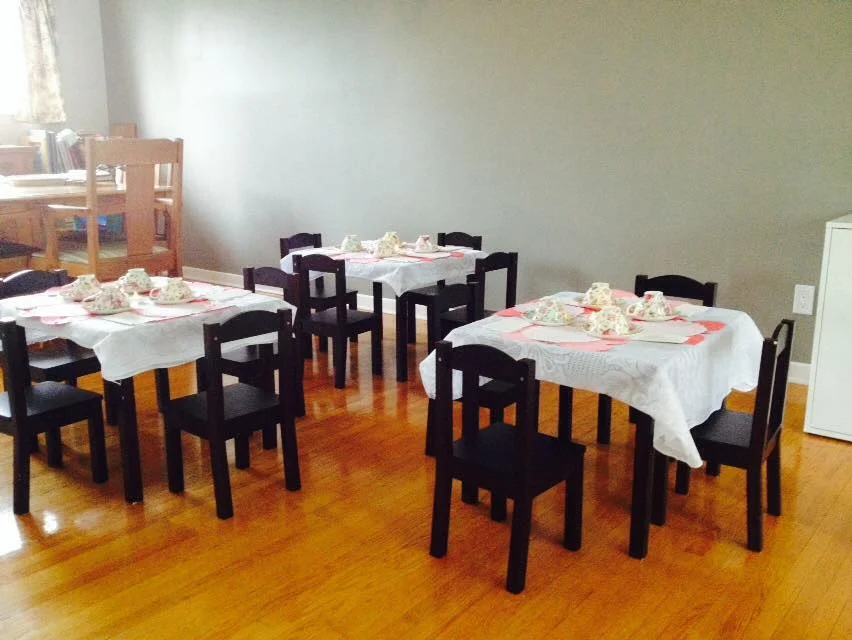
The tea party birthday

My enthusiasm came crashing down last year when I threw a "tea party" birthday and accidentally invited 13 kids (ok fine, it wasn't accidental, but I didn't expect every single kid to RSVP "yes!") The beautiful scene was set, with miniature tables and chairs, porcelain tea cups and pots, mini sandwiches and cupcakes. And the result? It was really, really loud. And stressful. And messy. 

Not to mention the fact that these birthdays are often overwhelming for our little ones. They barely have time to look at one present before 5 small people are pressing their way into the crowd shouting "Open mine next! Open mine next!"

I swore up and down that I wouldn't do it again. My littlest has been totally neglected in this department, and often just gets some cake and a mini celebration with a couple of friends (it's also the fact that she has just started school now, so doesn't really have a network of friends yet!)

So this year, we are doing an "unbirthday" party. I asked my daughter to think of 2-3 friends she really wants to spend time with, and told her we would be going out somewhere. We decided on a $5 movie at Cine Starz, and will then walk back to our house for some snacks, cake and playtime. 

Have you ever done an unbirthday for your child? Check out some ideas below!

A special activity

Most places charge over $150 to organize/host a birthday party. Instead, ask your child to choose 2 friends to invite and just go! You can have parents drop the kids off at the location, or perhaps you have enough car seats on hand (and a bigger vehicle!) to pick everyone up. And if you want to offer some food, pack snacks and cake in a cooler! 

Just go eat

I don't know about your kids, but mine love eating out! So invite 2-3 friends for a nice dinner somewhere, and ask the restaurant staff to stick a candle in the dessert.

You could also consider a weekend brunch, or maybe fancy high tea at the Chateau Laurier

Forgo the party for a super awesome gift

Has your child been asking for a special (and expensive) toy? Ask them if they'd rather give up the party in exchange for the thing they desire!

Do the party, but forget the extras

If you really want to do a party, but need to simplify, consider these tips:

- ask everyone to bring a used gift; perhaps something they have at home that they don't want anymore, or maybe some books they're done with. It makes gift giving less stressful, especially for the parents of the kids who are attending!
- don't do loot bags
- order in pizza instead of trying to make food
- buy a cheap-o cake or just do ice cream in special sugar cones

There are so many ways to reduce the stress we feel about birthday parties, and I'm going to hazard a guess that this will also reduce your child's inevitable party meltdown.

It's my party
and I'll cry if I want to
cry if I want to, cry if I want to
You would cry too if it happened to you...

5 Back to School Tips

by Penny Mayo

It is THAT time of the year again. The time when the evenings get cooler, the days get shorter and we are winding down our summer activities. It is also the time when we are preparing for the transition to back to school. Some parents love the return to routine and the end of camps, while other parents dread the return to making lunches and stressing about making it to school on time. Some kids can’t wait to meet up with their friends and pull out all those new notebooks, while other kids worry about remembering locker combinations and the amount of homework they might receive. Which one are you?

But it really doesn’t matter which one you relate to since there is one uniting factor - that almost everyone has jitters about something as we transition to the new school year.   

How do we curb those first day/week of school jitters for you and your kiddos?

It is a challenging time for most parents and kids even if it is a time everyone is looking forward to. Here are 5 quick tips to make it through the first week or two.

1.     Keep it very simple!

We’ve all heard how important it is to Keep It Simple. You may be wondering how you can keep it simple when we have no choice but to get the kids to school for the starting bell after being fed, dressed and, hopefully, hair and teeth brushed. But we do have plenty of choice for the hours that we are not at work and school. Just simply keep the expectations for these times low, don’t stress about the chores or the elaborate meals, don’t take on extra commitments and be sure to leave more time to get to places and get things done.

2.     Keep it low key!

Especially for kids and parents who may be nervous or have some anxiety, try to keep it low key. Society and Facebook might make it look like you need to have special first day of school outfits, have a special routine for the first day, have perfect first day of school pictures, have a new school bag and lunch box, etc. Well, the reality is, this is not a true expectation. Your family might work better if you go to school in the clothes you already have in your closet, with the back pack from last year. Save shopping for when the stores are less busy.

3.     Plan ahead!

Planning is hard after a summer of less structured time but the rewards are worth it. During the upcoming long weekend, take the opportunity to cook a few pounds of ground meat, cook some chicken, and bake a couple dozen muffins or protein bars to put in the freezer. In the morning, grab something out of the freezer so you know there is something easy waiting for supper when you get home and some healthy snacks for lunches the next day.

4.     Don’t write a to-do list or make a to-do pile!

If you are anything like me, my house is full of to-do lists and piles of papers that need attention. It only gets worse in the first days and weeks of school when all forms need to be completed NOW! Instead of putting it on the to-do list or the to-do pile – just sit down and fill them out and send them right back to school. Since you are having low key evenings, there is time to just sit down and fill them out.

5.     Allow yourselves to be lazy!

How can we allow ourselves to be lazy when there is so much to do with back to school time? The lazy days of summer makes for a hard transition to the crazy days of fall. If you balance the crazy school and work days in that first week or two with some lazy after dinner times, it will be an easier transition. If you can avoid going out during the evening of the first week of school and instead go for a family bike ride, go to the park or play some video games or board games with your kids, it will really help the transition to when extracurricular activities ramp up. By then you’ll be ready for it since you allowed yourself this calmer transition time.

How are you going to be gentle on yourself and your family during this year’s school start?

Penny Mayo is a parenting coach at Single Parenting for Success

Back to School and Childhood Anxiety

It's back to school again, which means a lot of kids are worried about what the new school year will mean for them in terms of their teacher, friends, homework, etc. But what if these worries are keeping your child up at night? For more than just one night? Is it normal childhood worries or is it anxiety?

A child would much rather be having fun than feeling sick for reasons they don’t understand and no parent likes to see their child so nervous that they can’t sleep for days on end. Some children feel anxious when it comes to public speaking, for others it could be attending a birthday party, and for some just the thought of having to go back to school is enough to make their head hurt.

Anxiety is more than just worry. It is more than just nervous “butterflies”. If your school age child is constantly clingy, cries or suffers from excessive shyness in social situations; has constant worrying or if bellyaches are frequent then your child may be experiencing anxiety. If your child’s regular routine, such as going to school, going over to a friend’s house or participating in activities is affected then your child may be experiencing anxiety. According to Anxiety BC, anxiety affects about 20% of children and adolescents.

If you think your child is experiencing anxiety you may think it is easiest to look online for help, but sometimes something we read online is not enough. Cheryl Grant, MSW, RSW of C&C Counselling Services says it really also comes down to “assessing what's behind it all and the child's beliefs and family dynamics (especially if parents are also dealing with anxiety).”

In addition to seeking professional assistance, there are some books and websites that are informative when it comes to learning more about childhood worries and anxiety. With Cheryl’s help here are some tried and true resources about childhood anxiety:

Books

Wemberley Worried by Kevin Henkes

This storybook is helpful for younger children. Wemberley is a young mouse who worries about everything, but by the end of the book she realizes that she worries about so much that she has no cause for her worry.

This book is great for young kids who tend to worry about every little thing: will my friends still like me, will I have a good time, etc. It lets them know that worry is normal, but that it shouldn’t get in the way from experiencing new things.

The Kissing Hand by Audrey Penn

Told through the story of a mother raccoon comforting her child raccoon by kissing its paw before it leaves for school, The Kissing Hand is a great book for younger children who may have separation anxiety or are anxious about leaving their parents on the first day of daycare or school. The message is that their parents will always be with them – even when they are not physically present.

When My worries get too big! A Relaxation Book for Children who live with Anxiety by Kari Dunn

This book teaches children self-calming techniques, including meditation and yoga positions and has some activities that reading-level children can work through to identify their levels of anxiety.

What To Do When You Worry Too Much by Dawn Huber

This book includes activities and promotes valuable discussions between a parent and their child. If you have trouble discussing or understanding childhood anxiety then this book is a great tool to start the conversation as well as to help children identify and fight their worries in a real way.

The Relaxation & Stress Reduction Workbooks for Kids by Lawrence Shapiro & Robin Sprague

Written by two child therapists, this book contains more than fifty activities kids and parents can do together to help both parents and child replace stressful and anxious feelings with positive feelings. This book includes relaxation techniques and short activities children can do to create a sense of fulfillment and calm. The idea in this workbook is not only for the child to feel calm, but also for the parents to reduce their feelings of stress and overwhelm. 

Websites

7 Ways to Help Anxious Kids

http://lets-explore.net/blog/2010/02/7-ways-to-help-anxious-kids/

Anxiety Disorders Association of Canada - Childhood Anxiety

http://www.anxietycanada.ca/english/childhood.php

Anxiety BC Website (there is a section devoted to parent and child, but they also speak to resources for youth, etc.) 

https://www.anxietybc.com/parenting/parent-child

Anxiety in children is more common than you think and chances are a child in your life is suffering. Children can suffer from a variety of anxiety disorders, some of which are the same as what adults suffer from. Various situations can bring on the intense feelings associated with anxiety – and sometimes it is difficult for the child, let alone their parents to know what those situations are and what they can do to help. If you are concerned that your child may be experiencing anxiety, the first step is to talk to be supportive and contact your family doctor about getting assistance from a mental health professional. Rest assured that children can overcome anxiety with the right tools and support.

Family Fun Activities: Pokemon GO

Pokemon GO came out at the beginning of summer and it's been really popular ever since. I've wanted to write this post for a few weeks, but to be honest I was just too busy playing the game to sit down and write!

Some people seem to think that Pokemon GO is just another time wasting game but based on what I've experienced and witnessed, it's actually a great way to get your family out of the house and active together. Today I'm sharing a few of the reasons I think it's a great family activity.  

I'm not going to get into TOO many details on how the game works in this post, but if you want me to break it down into a "what is it and how do I play?" post, leave a comment and I'll do that next week!

1) You gotta move

In order to find the Pokemon (unless you're using some kind of "cheat" which you really shouldn't be) you have to get up and walk around and explore new places. You can't sit in your house and find lots of Pokemon, you need to go for walks.

Not only do you need to go looking for Pokemon, but you get eggs that you need to incubate, and to incubate them, you need to walk (there are 2km, 5km and 10 km eggs for example.) So, we go on evening Pokewalks and when my kids need to get outside but are just in a mood where no idea appeals to them, I'll often give them the phone and a destination to walk to and see if they can incubate an egg (this obviously depends on the age of your kid though).


2) You get to explore new places

Want a reason to go and look at monuments and talk about the history of a city? Play Pokemon GO with your kids because monuments, statues, murals, etc. are generally PokeStops (a PokeStop is where you go to get supplies such as Pokeballs, which you need to catch Pokemon, potions to revive and heal your Pokemon when they've been in a battle, and other cool things).  You need to go to PokeStops to keep playing the game and PokeStops can be really fun to explore.

We have walked around Confederation Park, Pembroke, Cobden, Renfrew, World Exchange Plaza and Sparks Street, and the deal is that whenever possible, we stop and see just what the PokeStop is all about.

We've seen cool statues, fountains, read the war memorial statues and explored the waterfront in Pembroke and my kids and husband went on a crazy bridge in Renfrew (I have a fear of bridges, so I stayed on land and took a photo, :)

3) Combine it with other activities

Some people have told me they think geocaching is better. I think geocaching is amazing and since my husband doesn't really enjoy Pokemon GO he has taken the opportunity to be out in new places to find the caches that are often in some of the similar places as you can find many PokeStops. We're getting to do both at the same time and the kids really enjoy both aspects of it.

Other ways you can combine it with activities is to go to farmer's markets or see if anyone is hosting a Lure Party. (A Lure Party is when a PokeStop has someone activate a lure which attracts more Pokemon. If you see a PokeStop with pink dots hovering around it, someone activated a lure so you're sure to catch more Pokemon than usual there. Sometimes business owners will activate the lures to make coming to their store or business fun for the whole family. I know some farmer's markets have done this, as well as business associations. It's a fun and smart way to combine activities - one person shops (my husband) while I catch Pokemon and let my kids help. :)

Use it as an opportunity to teach 

There are a lot of things that come up when playing Pokemon Go with your kids that are great lessons to teach.

Don't walk and play. The phone will buzz if there is a Pokemon around so know where you're going, walk with eyes ahead, and then stop and look down when needed. You hear all kinds of stories about people walking into traffic. This can happen with far more than just Pokemon GO, use it as an opportunity to talk about being safe.

Some people feel that people are trespassing to play Pokemon GO. Again, this is an opportunity to teach your kids about trespassing and privacy, and about the importance of not going places you aren't supposed to be. Playing together adds the opportunity to do this.

A few words of warning:

- Pokemon GO drains your cell battery really quickly. Make sure to have a full charge before you go out and maybe even bring a battery pack along with you.

- Pokemon GO data usage isn't horrible, but be aware and check in on how much you're using so you don't end up suddenly using your data for them month. It seems quite similar to other map apps so if you keep those on during long drives, this wouldn't be different.

- It can be addictive to the parents as well as the kids. So I hear anyways ;)

Over all, I think the Pokemon GO can be a really fun family activity and it's motivating to many people to get outside and moving. In my opinion it's a great example of how games can make life MORE social, because we have met up with friends in parks to go Pokemon hunting together. Games don't need to make you sedentary and antisocial, they can motivate you to get out of the house when it otherwise would be hard, move, and hang with friends!

Do you play Pokemon GO?