Stranger danger: is it as real as it's made out to be?

By now most of us have seen the video that went viral the other day, showing a social experiment in which kids were lured away by a stranger and a cute dog:

I had a problem with this video the moment I saw it circling my news feed, mainly because of the statistic he quotes at the end (700 children abducted every day? Where did he pull that from??) But it also bugged me that there was no mention of abductions by strangers vs. abductions by family members. The majority of child abductions that take place are by a person known to the child - usually by a biological parent during custody battles.

I think this type of video creates unnecessary fear among parents, when they should probably be focusing more on the basics - like how to secure their child properly into their car seat. The risk of your child being injured in the car is far greater than the risk of your child being abducted by a stranger. 

That said, I'm not one to deny the possibility of someone approaching my child with less than good intentions.

Why? Because it might have happened to me.

Let me tell you a little story. To do this, I need to go back...WAYYYY back.

************************

It's 1999 and I'm a first year university student at Ryerson in Toronto. I'm commuting from my home in Scarborough to downtown every day. The Rouge Hill GO Station is about a 20 minute walk from my home, so I lug my uber heavy IBM laptop down Port Union Rd. (funny side note - I am one of the first students to try out a brand new technology on campus....WiFi. All of my courses are "online." Hence the heavy IBM laptop).

It's about 4 p.m., and I think it must be fall or spring, as I don't remember snow on the ground. It's light out. And if you're familiar with Port Union Rd., you know that it's fairly busy with traffic.

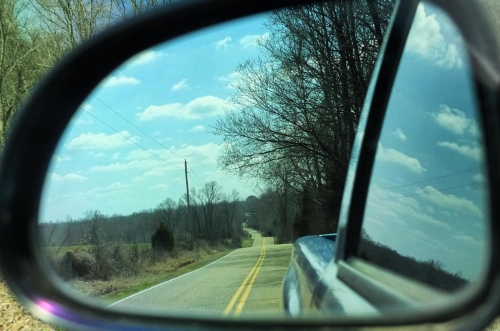
Lost in my little bubble of thoughts, it takes me a while to notice that a green jeep Cherokee is slowly doubling back after passing me. I notice the car make a right at the next lights, and then pull a u-turn, only to drive by me again. My spidey senses kick in - what's this guy doing?

I make a left down a street that leads to my house. It's a lot quieter on this street, and it's very clear this car is following me. He's driving slowly, about 200 metres behind me. He finally pulls up alongside me, but continues to drive slowly. I take a quick peek, but I can't see much - tinted windows, maybe he's wearing sunglasses, and a dark head of hair.
Here's where "stranger danger" is real - I don't know this guy, and he's acting strangely. So what do I do? Stop to have a chat with him? Ask him for a ride home?

Nope, it's 1999 and I've got my very first cell phone - a clunky Nokia. I whip it out and dial my boyfriend's number. Within one minute, the guy has sped off, never to return.

I get to my house 5 minutes later. And being a teenager, I just shake it off and get on with my homework. I can't remember if I told my parents or not.

The next day we receive a recorded message from Toronto police, asking for information about a suspicious man in a green jeep approaching young children. I'm confused, because really, I'm not that young (19!). But I give them a call, and eventually get interviewed by police at my home.

I'm a terrible witness. Not only did I not get a close look at him, but I didn't even think to check out the license plate number. I find out he approached several other kids that day, all much younger than me. All of the children managed to get away safely. The police think that he may have mistaken me for someone younger. The investigation comes to nothing, and I never hear from the police again.

***************

I don't know what this guy would have done to the kids he tried to lure into his vehicle. Beating? Rape? Murder? It's a terrifying thought, but it gives me hope that we all did the right thing.

And this experience does nothing to change my view that the world is generally a good place. Everyone is a stranger before they become an acquaintance or a friend, and I never want my kids to go through life scared. Since that experience, I have walked the streets at night and during the day, confident that I belong there. A few bad eggs won't deny me the right and the freedom to move freely in my own neighbourhood.

We've had conversations with our oldest that go something like this:

"Most people in the world are good. But sometimes people do bad things, and it's important that we use caution and prepare ourselves in case we come across one of those people."

So what does my kid know? She knows she is to never go with anyone, even friends or family, without permission from Mommy and Daddy. She knows to say "no" even when they tell her Mommy is really sick and they need her help. She knows to say "no" even if they try to offer candy or cute puppy dogs.

But she also knows that strangers can be good, kind and helpful. Strangers can assist us when we're hurt. Strangers can become our friends. And strangers can even protect us when we need protection.

Talk to your kids. Open up the conversation. But for goodness sake's, don't make them fearful of living in this world.


**Edited to add: You know what else is bugging me about this video, and all the conversations we're having about it? This fear comes from a place of white privilege. In light of all of the missing and murdered aboriginal women in this country, I can't quite help but think that our fears go unfounded

Are you protecting your kids from brain cancer?

Since the explosion of technology in the last twenty years, we have encountered a backlash of parents and experts who worry about the implications of these gadgets on our children's health:

Video games promote violence!
Obesity!
Lack of communication skills!
Texting and driving!

The list goes on and on. I loved this piece from Yummy Mummy Club, basically telling parents to chill out. Spencer's rules are simple: enjoy in moderation, know what your kids are up to, and be actively involved in their interests. 

But what if there were a scarier side to tech gadgets? 

As a health researcher, I see many interesting presentations from folks all around the world. Last week I saw a speaker named Dr. Devra Davis, who is the President of the Environmental Health Trust - a US non-profit that educates the public about controllable environmental health risks and policy changes needed to reduce those risks. One of these risks may be cancer, linked to our exposure to microwave radiation from cell phones, WiFi and other wireless devices. Despite her long list of accomplishments, she often receives slack from skeptics who question the data she's using.

And rightly so - the evidence that tech gadgets cause cancer is widely disputed. The WHO has classified the electromagnetic fields produced by cell phones as "possibly carcinogenic to humans." Unfortunately there's just not enough good quality evidence to say for certainty.

So, what did I take away from this presentation? Here it is in a nutshell:

  • Data is emerging that shows a link between microwave radiation and our health
  • Think about any public health issue - climate change and smoking are two biggies that come to mind. How long did it take from the first scientific data to emerge (e.g. cigarettes cause lung cancer) to a change in public policy? YEARS. When it comes to our children, how long are we willing to wait?
  • Banning cell phones and WiFi is not the answer - tech is here to stay. But how can we make it safer?

I left the presentation slightly spooked, but I also didn't want to jump to conclusions and scare everyone else (or worse, be dismissed completely as a bit of a kook). But further reading still leaves me uneasy, and I've decided to take steps to protect my kids and my family. Children's brains are very different from adults - they absorb more radiation, and are growing. Here's what we're looking to do:

1. Turn off the WiFi: this is already something many parents do, to prevent kids from being on their phones at all hours of the day. We don't use the WiFi from about 10pm until 6am, so we're looking at getting a timer

2. Airplane mode: from now on, my kids won't be allowed to use our iPhones unless they are on airplane mode

3. Distance: Have an iPhone? Go into your Settings, click General and then About. If you scroll all the way down you will see "Legal" - click on that, and then click "RF Exposure." What does your say? Mine recommends I carry my iPhone 10 mm away from my body to ensure exposure levels remain at or below the as-tested levels. So MEN - stop carrying your cell phones in your breast or back pocket. LADIES - no cell phones in your bras! And it's time for me to get a headset!

4. Corded landline: we were about to cut our home phone, but now I'm thinking we might keep it AND get a corded phone....do they even make those anymore?

5. Avoid freaking out: it's easy to feel both scared and helpless when dealing with issues that are out of our control. It's important to remember that we are faced with risk every day of our lives - we get in our cars and risk getting into a car accident. But seat belts help to protect us. So instead of freaking out, I want to think more about how I can make cell phones safer.

What is the one principle that is drilled into the heads of healthcare students? First, do no harm. Well, the harm data has emerged, and I'm inclined to do something about it before it's too late.

What do you think? Will you take steps to protect your children?

Exploring with the Spot App

by Kamerine

Kids are natural explorers. It starts with infancy - they want to touch and feel everything. Soon they are toddling around their environment. They put things in their mouths and get so dirty! Their desire to learn is insatiable.

It's no different with technology. I think they push all the buttons on remotes and iDevices because they aren't worried about breaking the thing. They just want to know what happens when they push THIS button or THAT button! And it's amazing what they can learn about devices in a short time. I swear my kids know how to work the remotes and my phone better than I do!

Screen time is part of our reality these days. Limited screen time is good but sometimes letting the kids watch a show or play on the iPad is what gets us through the day. The new Spot app is perfect for little explorers. The app opens to a white screen with a ladybug and then the exploring begins.

Little fingers pull apart to make the ladybug bigger... and bigger... and BIGGER! until a new world is uncovered. This goes on and on in the app, exploring what's inside cookies and papers and the table. The whole world can be explored and fun things found.

It was so much fun watching those little fingers going all over and the looks of excitement at discovering what there was to see next. The Spot app is very creative and fun, but it's no wonder when it was created by David Wiesner, a celebrated story teller. Spot allows kids to come up with their own story.

Without a specific task or bad guys to battle, my 5 year old son didn't stay interested too long, but my 4 year old daughter had fun exploring until it was time to turn off the screen. I love how this app encourages exploration and imagination.

This app is for iPads and is available for purchase in the App Store for $4.99. What apps are your kids loving these days?

Disclaimer: I was provided a code to download this app for free. All opinions are my own. 

I let my kid go to the park by herself

I was really tempted to write "and you'll never guess what happened next" at the end of this blog post title. I just couldn't do it - click-bait headlines are my biggest online pet peeve (other than nasty trolls and stupid people.)

Because honestly, nothing happened. We've read the sensational headlines about the Maryland couple whose kids have been held by child protective services, after the 6 and 10-year-old were allowed to go play at the park alone.

Our house backs onto a park, so I can't say my daughter was totally out of my sight. I was busy trying to get some mushroom compost worked into the gardens, and she just wanted to play.

"Go on," I said. "If any grown-ups ask, just point over here and tell them I'm your mom."

No angry parents came to talk to me, and CAS wasn't called (phew). But the thought crossed my mind - because if it were me at the park, and I saw a little girl playing all alone, I'd be inclined to ask the same questions. 

We're so used to being with our kids at all times. If not us, then at least their teachers or daycare providers. The ramifications of leaving our children to play alone, even if it's what WE did as young children, could be devastating. And I'm not thinking of abductors or abusers - I'm thinking of the mom next door who's going to call the cops on me.

My daughter came back 15 minutes later, happy as a clam. She'd found a playmate, and had her share of fun while Mommy did the grunt work. Freedom and fun....oh to be a kid again.

I'm curious to hear from other parents - my daughter is 5.5 years old. Is she too young to be at the park alone?


Bird Day Fair 2015

Ever wondered about those birds that hang out in your backyard? How to imitate those bird calls or the best techniques for bird watching? Or even what it’s like to be a bird?

Find out the answers to these questions and more at Nature Canada’s Bird Day Fair!

Ottawa’s third annual Bird Day Fair will take place on Saturday May 30th, 2015 at Andrew Haydon Park. It will be a day to “Welcome back birds” in a public celebration of International Migratory Bird Day in the national capital region’s own Important Bird Area (IBA). 

The event is free and fun for all ages.

•    Be sure to check out Little Rays Reptiles! They will present their "Endangered Ontario" show at 1:15pm on the main stage. The show will feature 2 birds of prey, 2 ferrets, 2 snakes, 2 turtles and an amphibian and a fox - all from Ontario of course!
•    Falcon Ed is back this year by popular demand with their live raptors. See these impressive birds up close at the Falcon Ed booth. 
•    Get creative and help us build bird nest large enough to roost in! Be sure to look the part by making your own bird mask, or getting your face painted. 
•    Learn about bird banding, a method that scientists use to study birds, by joining the early birds to observe bird banding, or get banded yourself by the experts at the Innis Point Bird Observatory booth. 
•    Meet local groups working to protect nature, wildlife and learn how you can get involved in nature conservation every day
•    Join experts on guided nature walks. No experience necessary. 

The Bird Day Fair is a celebration of the incredible migration journey of birds. Some birds travel as far as 25,000 miles round trip from their breeding grounds in the Canadian arctic to their wintering grounds in South America. 

For more information on what is happening at the Bird Day Fair check out the event page

Stay up to date on what is scheduled by joining the Facebook event

If you are interested in volunteering at this event, please contact Sarah Kirkpatrick-Wahl at skirkpatrik-wahl@naturecanada.ca.