Don't tell my daughter to "cover up."

I received an email from my daughter's school over the weekend, reminding parents of the school's dress code. I won't share the image here, as I would like to protect my daughter's privacy.

Let me describe it for you: the PDF included three images: one illustrating the "proper" width of a tank top strap, another showing the "correct" length for shorts, and the third showing a pair of flip flops and crocs with an X marked through the picture. There is also some text describing which images are/are not acceptable on t-shirts.

Let's ignore the Crocs right now (a rule which is completely sensible - children need sturdier shoes to be climbing safely on the jungle gyms.) 

What stuck in my craw, and led me to post the file on my Facebook wall, was the document's obvious target of girls and their nakedness (or lack of nakedness).

It has been one of the most engaging threads on my wall that I've ever read. Although I'd say the majority of my Facebook friends are self-proclaimed feminists and take issue with dress codes, I appreciated the lone comments from other friends who couldn't understand why the dress code was problematic. 

Some of the arguments FOR dress codes

  1. All children need to learn to be "respectful" and "professional." They need to learn that, down the road, it will not be appropriate in the workplace to wear a shirt that shows their bra straps (for those wearing bras), or skirts/shorts short enough to reveal too much leg.
  2. These dress codes are not necessarily targeting girls - boys are also asked not to wear t-shirts with violent images or pants that hang down past their boxer shorts.
  3. At some point "girls" become "women." If we don't think it's right for a young woman to be dressed provocatively, then why would we allow our young daughters to do the same?

Arguments AGAINST dress codes

  1. Self-respect or being "respectful" has nothing to do with the clothing girls wear, or the amount of skin they're showing
  2. Dress codes sexualize young girls by assuming that their clothing is provocative - that boys will be distracted by their shoulders, legs, butt and breasts. Dress codes enforce the notion that girls need "protection" from boys.
  3. Dress codes are only enforced for some girls - the ones who develop early and have breasts are told to cover up, yet the petite breast-less girls are not asked to do the same.
  4. By enforcing dress codes, we can invariably make some girls (the ones who are either chubbier or developing more quickly) feel very uncomfortable about their bodies.

This is a touchy subject, and one that made my head hurt :) As a feminist, I lean towards the arguments against dress codes, given that they target girls more than boys. A gender-neutral dress code seems more appropriate to me, but I have yet to see one that isn't  heavily focused on what girls wear.

I want to raise my daughters to be happy in their own skin, and I worry that someday they will be made to feel uncomfortable by a teacher or principal. 

And as a breastfeeding advocate, I have serious issues with young girls' chest fat or developing breasts being sexualized (in fact, I don't think any breasts should be sexualized. They are there to feed babies, full stop, whether or not you are willing or able to breastfeed).

Being a girl is tough stuff, and is made tougher when our body parts are constantly being objectified.

And, personally, this dress code is a hard pill for me to swallow...

What do you think? Should short shorts and spaghetti straps for young girls be banned?


How to talk with your kids about sex and sexual health

By Chris

Ontario is implementing a new Health and Physical Education curriculum this fall and the revisions to the sexual health education components have resulted in a public discussion about what is appropriate for our children to be learning.  

Sexual health education is challenging for many parents. We bring all of our learning and life experiences, positive and negative, to the topic. We bring our perceptions of our own bodies and we bring religious and cultural teachings. It is a lot to pack into one issue.

Kids don’t come with instruction manuals. There are, however, some things we can do to help our kids learn about their bodies and prepare them for the physical and emotional changes to come. We can help them to make informed choices and protect themselves and we can teach them our values.

Sexual health is a lifelong discussion. It is not a single ‘talk’. Sexual health is not the same as sex. Humans are sexual beings. We are designed to reproduce and our bodies are designed to experience sexual pleasure. Although not all people choose to reproduce, we all have the bits to make it happen. Taking care of our sexual and reproductive organs is part of being healthy.

As parents our job is to keep our kids safe. There are all kinds of conflicting messages about how to do that. How do we do it all?

How to talk with your kids about sex and sexual health

  • Check your feelings and values in advance. What is your perspective on sex? Are you satisfied with your level of knowledge? Where does sexuality fit within the context of your faith and culture? 
  • Respect your kids and where they are coming from. Answer their questions honestly. If you are a trusted source for accurate information, they will come to you for more instead of the internet or friends.
  • Clarify what they want to know. Ask what they know/understand first. Ask what they have heard and if the information you provide answers their questions.
  • Respond to your kids’ questions, don’t always push your values. They will learn your values from daily life and how you respond to issues and questions in life. It isn’t necessary to push values when they are seeking facts.
  • Acknowledge when you are uncomfortable with a topic or when you don’t know the answer.
  • Be realistic. Too much information all at once can be overwhelming. Pay attention to what your child is saying with their words and their body language.
  • Let them know that there is a range of normal feelings, changes, relationships, etc. 

Starting the conversation

  • Start the conversation when they are learning to talk. Teach them the correct vocabulary for all of their body parts - arms, legs, vulva, penis. Give them the language for the rest of the conversation.
  • Teach about consent in all areas, not just sex. Check in to see if they are ok with being tickled. Give them permission to refuse cheek pinches from older relatives. Don’t force them to give grandma a kiss good-bye.
  • Take advantage of teachable moments such as a pregnant adult in their life, media stories or tv shows about topics related to sexual health.
  • Answer questions as they come up. Answer the question they ask e.g. where do babies come from? They may not want a full discussion on reproduction. An answer such as “Mummy’s tummy” might be sufficient. Other questions like how do they get out or how do they get in there will come in time. 
  • Read a book with them - some great suggestions from Yummy Mummy Club

Resources

Ontario Health and Physical Education Curriculum 2015 - including parent guides

Ottawa Public Health 

Planned Parenthood Ottawa - community sexual health educators

Sexual Health and Rights Canada 

Chris is a Canadian father of three girls, and writes a great blog called Dad Goes Round. Connect with him on his Facebook page!

Meals made easy - Culiniste

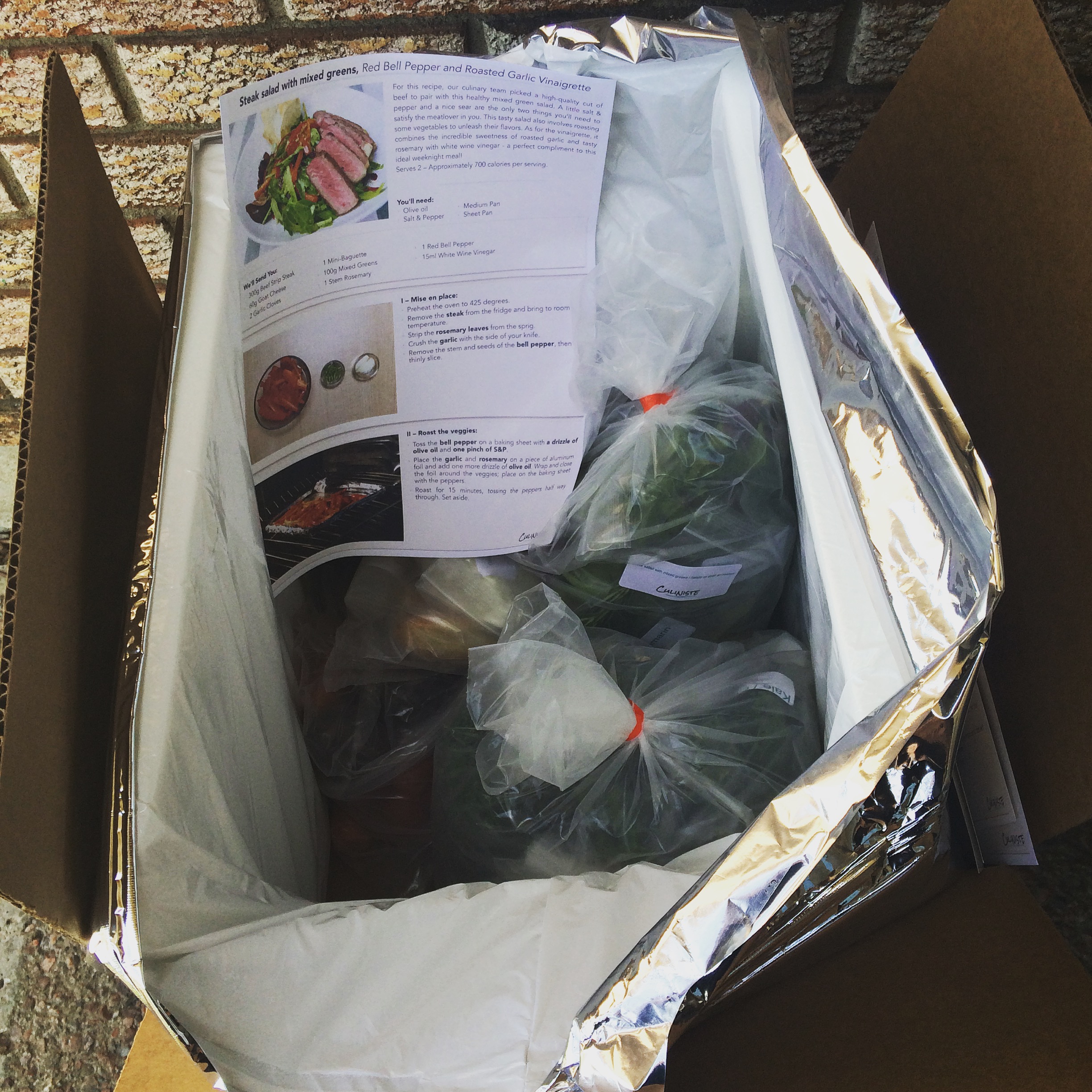
We get quite a lot of pitches at Kids in the Capital but when this one landed in my inbox I was particularly excited. The opportunity was to try out a service called Culiniste with a family-sized box. They describe themselves as a better way to cook with fresh ingredients and delicious recipes delivered to your door weekly.

How it works

Ingredients came sorted by recipe and really well insulated.

Ingredients came sorted by recipe and really well insulated.

Every week you get the recipes and ingredients delivered to your door for three recipes (you can choose if it's enough for two people or for four.) You then receive a box with all the ingredients in just the right proportions delivered to your door on Tuesday in a very well insulated and refrigerated box. Each recipe comes with step by step instructions to walk you through cooking each meal. I was also particularly impressed with how green the company is, including instructions on how each part of the package is recyclable and how to deal with them.

What did I think?

There are so many things about this service that I loved.

- The ingredients were fresh and high quality

Just the right amount of each ingredient

Just the right amount of each ingredient

- The ingredients came in just the right proportions. So often I want to make a recipe and only need two tablespoons of something I don't have. I end up buying an entire bottle of something, forgetting I have it, and then buying another bottle of it the next time a recipe calls for that ingredient. They send you everything you need (except olive oil) which I loved and found so convenient.

- The food was tasty and for the most part my kids liked it (admittedly, they wouldn't eat the kale). We had balsamic chicken, swedish meatballs with mashed potatoes and steak salad with baguette. The meals for four definitely had enough for our family of five with kids who don't have huge appetites.

- I liked that there was a good variety in the dishes available to choose from. Spicy, mild, vegetarian, and a mix of kinds of meats to choose from.

There are a few reasons that I wouldn't choose to have this service on a regular basis for my family though. It was a bit more work intensive than I expected. For example, the day we had meatballs I didn't expect I would have to make the meatballs from scratch. The shortest time I spent on the meals was about 30 minutes for the steak salad and the balsamic chicken took a full hour in the kitchen with almost constant tasks for me to do.

Who do I think this is good for?

People who love to cook from scratch with fresh ingredients but don't have the time to go out and get the ingredients easily. People who have a hard time coming up with good meal planning ideas or who struggle with not wasting food when they cook (I'm a big culprit in that department by not getting just the right proportions of things.) They definitely had enough kid friendly options to keep my fairly picky kids happy.

I would definitely get it again, just not every week. If you want to try it out, they've shared a discount code for $20 off your first order on their website. Use kidsinthecapital20 at checkout to take advantage and then let me know what you thought! 

Mother's Day in Ottawa: Round-Up

What are you doing for Mother's Day? Here are a few great ideas here in Ottawa:

  1. Mother's Day Brunch - what better way to celebrate than to Eat All The Food? There are a number of places putting on fantastic brunches, including Museum of Nature, Brookstreet,  Fairmont Chateau Laurier, or The Herb Garden.
  2. Tulip Festival
  3. City Museums - the tea at Billings Bridge is full, but several other Ottawa museums are putting on great events!
  4. Comicon - well hey, some moms like comics and characters, right?
  5. Ottawa Farmer's Market - open for Spring season with lots of wonderful goodies!

Or better yet, send the husband out with the kids to one of these events, and spend the day at home sipping mimosas and soaking in the tub :)

Happy Mother's Day!


Stranger danger: is it as real as it's made out to be?

By now most of us have seen the video that went viral the other day, showing a social experiment in which kids were lured away by a stranger and a cute dog:

I had a problem with this video the moment I saw it circling my news feed, mainly because of the statistic he quotes at the end (700 children abducted every day? Where did he pull that from??) But it also bugged me that there was no mention of abductions by strangers vs. abductions by family members. The majority of child abductions that take place are by a person known to the child - usually by a biological parent during custody battles.

I think this type of video creates unnecessary fear among parents, when they should probably be focusing more on the basics - like how to secure their child properly into their car seat. The risk of your child being injured in the car is far greater than the risk of your child being abducted by a stranger. 

That said, I'm not one to deny the possibility of someone approaching my child with less than good intentions.

Why? Because it might have happened to me.

Let me tell you a little story. To do this, I need to go back...WAYYYY back.

************************

It's 1999 and I'm a first year university student at Ryerson in Toronto. I'm commuting from my home in Scarborough to downtown every day. The Rouge Hill GO Station is about a 20 minute walk from my home, so I lug my uber heavy IBM laptop down Port Union Rd. (funny side note - I am one of the first students to try out a brand new technology on campus....WiFi. All of my courses are "online." Hence the heavy IBM laptop).

It's about 4 p.m., and I think it must be fall or spring, as I don't remember snow on the ground. It's light out. And if you're familiar with Port Union Rd., you know that it's fairly busy with traffic.

Lost in my little bubble of thoughts, it takes me a while to notice that a green jeep Cherokee is slowly doubling back after passing me. I notice the car make a right at the next lights, and then pull a u-turn, only to drive by me again. My spidey senses kick in - what's this guy doing?

I make a left down a street that leads to my house. It's a lot quieter on this street, and it's very clear this car is following me. He's driving slowly, about 200 metres behind me. He finally pulls up alongside me, but continues to drive slowly. I take a quick peek, but I can't see much - tinted windows, maybe he's wearing sunglasses, and a dark head of hair.

Here's where "stranger danger" is real - I don't know this guy, and he's acting strangely. So what do I do? Stop to have a chat with him? Ask him for a ride home?

Nope, it's 1999 and I've got my very first cell phone - a clunky Nokia. I whip it out and dial my boyfriend's number. Within one minute, the guy has sped off, never to return.

I get to my house 5 minutes later. And being a teenager, I just shake it off and get on with my homework. I can't remember if I told my parents or not.

The next day we receive a recorded message from Toronto police, asking for information about a suspicious man in a green jeep approaching young children. I'm confused, because really, I'm not that young (19!). But I give them a call, and eventually get interviewed by police at my home.

I'm a terrible witness. Not only did I not get a close look at him, but I didn't even think to check out the license plate number. I find out he approached several other kids that day, all much younger than me. All of the children managed to get away safely. The police think that he may have mistaken me for someone younger. The investigation comes to nothing, and I never hear from the police again.

***************

I don't know what this guy would have done to the kids he tried to lure into his vehicle. Beating? Rape? Murder? It's a terrifying thought, but it gives me hope that we all did the right thing.

And this experience does nothing to change my view that the world is generally a good place. Everyone is a stranger before they become an acquaintance or a friend, and I never want my kids to go through life scared. Since that experience, I have walked the streets at night and during the day, confident that I belong there. A few bad eggs won't deny me the right and the freedom to move freely in my own neighbourhood.

We've had conversations with our oldest that go something like this:

"Most people in the world are good. But sometimes people do bad things, and it's important that we use caution and prepare ourselves in case we come across one of those people."

So what does my kid know? She knows she is to never go with anyone, even friends or family, without permission from Mommy and Daddy. She knows to say "no" even when they tell her Mommy is really sick and they need her help. She knows to say "no" even if they try to offer candy or cute puppy dogs.

But she also knows that strangers can be good, kind and helpful. Strangers can assist us when we're hurt. Strangers can become our friends. And strangers can even protect us when we need protection.

Talk to your kids. Open up the conversation. But for goodness sake's, don't make them fearful of living in this world.


**Edited to add: You know what else is bugging me about this video, and all the conversations we're having about it? This fear comes from a place of white privilege. In light of all of the missing and murdered aboriginal women in this country, I can't quite help but think that our fears go unfounded